
Federal Healthcare Fraud Attorneys: Civil & Criminal Defense
Nationwide Federal Lawyers. Federal Cases Only. Former DOJ Prosecutors on Your Team.
 Watson & Associates, LLC | Federal Healthcare Fraud Attorneys for Cases Only, Nationwide | 1.866.601.5518 — Line Open 24/7
Aggressive defense up front could shape the outcome of your case
A federal healthcare fraud case rarely announces itself. There is no warning call, no courtesy heads-up. The Department of Justice, the FBI, and the HHS Office of Inspector General typically spend months — often years — building a file before a physician, hospital executive, or billing company ever learns an investigation exists. By the time a subpoena arrives, the government usually already believes it knows the answer.
That is the reality of federal healthcare fraud enforcement, and it’s why the first decision you make matters more than almost any other in the case: who you call, and how quickly.
Watson & Associates, LLC is a health care fraud attorney practice devoted entirely to federal matters — investigations, indictments, and trials under the False Claims Act, the federal healthcare fraud statute, the Anti-Kickback Statute, and the Stark Law. Our attorneys include former DOJ prosecutors, a former federal agency executive admitted to the U.S. Supreme Court, and former Assistant U.S. Attorneys who built these exact cases before they started defending against them. We represent physicians, hospital systems, pharmacists, home health and hospice operators, laboratories, DME suppliers, and healthcare billing companies nationwide.
One important distinction before you read further: our practice is limited to federal healthcare fraud matters. We do not represent clients in state-level Medicaid fraud board proceedings or state criminal court. If your matter involves the DOJ, the FBI, HHS-OIG, a federal grand jury, or a federal False Claims Act case, you’re in the right place.
If you’ve received a subpoena, a Civil Investigative Demand, a target letter, or a visit from federal agents — or you simply have reason to believe your billing practices are under review — call 1.866.601.5518 now and ask to speak with Theodore Watson directly. The call is confidential, and there is no cost to have the conversation.
Speak with Theodore Watson — 1.866.601.5518, available 24/7. Download the Federal Healthcare Fraud Defense Checklist
Who We Represent
We defend physicians and group practices, hospital systems and executives, home health and hospice operators, pharmacists and pharmacy operators, clinical and diagnostic laboratories, DME and O&P suppliers, pharmaceutical and device companies, behavioral health and substance use treatment providers, telehealth platforms, billing and revenue cycle management companies, nurse practitioners and PAs, therapy practices, ambulatory surgical centers, skilled nursing facilities, and federally qualified health centers — in federal investigations, indictments, and trials nationwide.
What to Do in the First 48 Hours
Before anything else, three rules apply regardless of how you were contacted:
- Do not explain yourself to an investigator. A conversation intended to “clear things up” is the single most common mistake we see. Anything you say can — and typically will — be used to build the case against you.
- Do not produce documents on your own. What you turn over, and how it’s framed, shapes the entire investigation. Counsel should control every production.
- Do not wait to see if it “goes away.” Federal healthcare fraud investigations do not resolve themselves through inaction. Early intervention is the single biggest factor in whether a case ends in decline, a civil resolution, or an indictment.
Our team includes attorneys who spent years on the other side of this exact process — negotiating with AUSAs, standing in front of federal grand juries, and deciding which cases to charge. That perspective shapes how we intervene from day one.
What Counts as Federal Healthcare Fraud
 Federal healthcare fraud is not a single charge — it’s an umbrella term covering several overlapping statutes, and a single investigation frequently implicates more than one at the same time. Common allegations include:
- Billing Medicare, Medicaid, TRICARE, or the VA for services never rendered
- Upcoding or unbundling procedures to inflate reimbursement
- Billing for services that were not medically necessary
- Paying or receiving kickbacks for patient referrals
- Prohibited physician self-referral arrangements (Stark Law)
- Falsifying patient records, certifications, or cost reports
- Medicare Advantage risk-score manipulation
- Telehealth and genetic-testing billing schemes
Whether any of this amounts to federal health care fraud in the legal sense turns on one question: intent. Billing errors, coding disagreements, and good-faith judgment calls about medical necessity are not fraud. The government has to prove you knew the conduct was wrong and did it anyway — and that is the fight our law firm takes on from the moment we’re retained.
The Federal Statutes Behind Every Healthcare Fraud Case
18 U.S.C. § 1347 — The Federal Healthcare Fraud Statute
This is the primary criminal statute: knowingly and willfully executing, or attempting to execute, a scheme to defraud a healthcare benefit program.
| Element | What the Government Must Prove |
|---|---|
| Scheme to defraud | A plan or course of conduct intended to deceive — not simply an error |
| Healthcare benefit program | Medicare, Medicaid, TRICARE, VA, or private insurance affecting commerce |
| Knowing and willful | The defendant knew the conduct was unlawful and acted deliberately |
| Connection to delivery | The fraud relates to the actual provision of, or payment for, healthcare services |
Penalties: up to 10 years per count; up to 20 years if serious bodily injury results; life imprisonment where a patient death is connected to the conduct; plus criminal fines and restitution.
The “knowing and willful” element is where most defenses are won. It is the difference between a compliance failure and a federal felony, and it’s the first thing our federal healthcare fraud attorneys examine in every case.
31 U.S.C. §§ 3729–3733 — The False Claims Act: Civil and Criminal Exposure Together
The False Claims Act is the government’s primary civil enforcement tool for healthcare billing fraud — and the statute most likely to be running quietly in the background of your practice right now. It allows private whistleblowers to file sealed qui tam lawsuits and collect 15 to 30 percent of any recovery. A former employee, a departed partner, or a competitor may have already filed a case against you. You would have no way of knowing; the government investigates under seal, often for years, before deciding whether to intervene.
| FCA Exposure | Amount / Consequence |
|---|---|
| Treble damages (civil) | 3x the alleged false claim amount |
| Per-claim civil penalties | Roughly $13,946–$27,894 per claim (2024, adjusted annually) |
| Criminal exposure (§ 287) | Up to 5 years per false claim submitted |
| Parallel healthcare fraud charge (§ 1347) | Up to 10 years per count, often charged alongside the civil FCA case |
| OIG exclusion | Mandatory on conviction; permissive on adverse findings |
| Corporate Integrity Agreement | Multi-year federal compliance monitoring |
This is why health care fraud defense attorneys who only handle the civil side, or only the criminal side, leave clients exposed. What you say in a civil deposition can become criminal evidence. What you produce in response to a Civil Investigative Demand can shape a parallel criminal charging decision. We manage both tracks simultaneously, as one case — because that’s what it actually is.
A separate risk worth understanding: the FCA’s “deliberate ignorance” standard means you don’t need to have personally known about false claims to face civil liability. If your billing environment was structured so that you should have known, that can be enough. We evaluate compliance systems and supervision structures as part of every defense — not just the billing records themselves.
42 U.S.C. § 1320a-7b(b) — The Anti-Kickback Statute
The AKS prohibits knowingly offering, paying, soliciting, or receiving anything of value to induce or reward referrals reimbursable by a federal healthcare program. “Anything of value” has been applied to consulting agreements, speaking honoraria, equity interests, below-market leases, and free staff time — not just direct payments.
- Criminal: up to 10 years per count
- Civil: every tainted claim becomes a separate False Claims Act violation
- Exclusion: mandatory upon conviction
- Safe harbors: properly structured employment relationships, personal services contracts, space and equipment rentals, and ASC investment arrangements can be fully exempt from prosecution — identifying an applicable safe harbor is often the single most effective defense tool available.
42 U.S.C. § 1395nn — The Stark Law
Stark is categorically different from the AKS: it’s a strict liability statute. The government does not need to prove intent. If a prohibited financial relationship exists between a physician and an entity receiving Medicare referrals — and no exception applies — a violation has occurred.
| Consequence | In Practice |
|---|---|
| Denial of related claims | CMS refuses payment on the entire referral relationship |
| Full repayment | Every dollar received must be returned, regardless of services rendered |
| Civil penalties | Up to $15,000 per claim |
| DOJ referral | Stark violations routinely generate parallel FCA exposure |
Stark law defense requires a forensic review of every financial arrangement — employment contracts, medical director agreements, leases, joint ventures — against the statute’s exceptions. Many issues are resolvable before a formal repayment demand, but only with early counsel.
18 U.S.C. §§ 1341, 1343 & 1956 — Mail Fraud, Wire Fraud, and Money Laundering
Federal prosecutors rarely file a single-count indictment when they don’t have to. Every electronic claim submission is a potential wire fraud count (up to 20 years); every mailed claim is a potential mail fraud count (up to 20 years); any transaction involving proceeds is potential money laundering (up to 20 years). Conspiracy charges under 18 U.S.C. §§ 371 and 1349 let the government reach individuals for conduct they didn’t personally commit.
A practice generating 500 claims a month, investigated over two years, produces thousands of theoretical wire fraud counts. No judge imposes the maximum on a stacked indictment, but that exposure drives plea negotiations — and understanding how stacked charges function is a core part of how we build a defense from the outset.
Medicaid Fraud — Where the Federal Track Applies
Medicaid is jointly funded by federal and state governments, and allegations can trigger both federal and state jurisdiction simultaneously. Our practice handles the federal share of Medicaid enforcement only — matters involving the DOJ, HHS-OIG, and the federal False Claims Act. State Medicaid Fraud Control Unit prosecutions fall outside our practice, and we’ll tell you plainly if that’s the track your matter is on so you can find the right state counsel.
Speak With a Federal Healthcare Fraud Defense Attorney — 1.866.601.5518
How Federal Healthcare Fraud Investigations Actually Unfold
 Most providers never see it coming, and that’s by design. Understanding what’s likely already happened — and what typically comes next — shapes how we intervene.
Before You Know: The Pre-Contact Investigation
- CMS data analytics. The Fraud Prevention System continuously flags statistical outliers — billing rates above peer norms, geographic mismatches, volumes that imply impossible service delivery — and routes them to the Medicare Fraud Strike Force and U.S. Attorney’s Offices.
- Whistleblowers and qui tam relators. Former employees, partners, or competitors with access to internal records are frequently the trigger for a sealed FCA complaint.
- Patient interviews. Investigators contact patients directly, without notifying the provider, to confirm whether billed services actually occurred.
- UPIC, RAC, and MAC audits. What starts as a routine billing audit can escalate into an OIG or DOJ referral when auditors see patterns suggesting intentional fraud.
When You Find Out: The Overt Stage
Any of the following means the investigation has reached a point where you need counsel immediately — not after you’ve reviewed the document yourself, and not after you’ve tried to explain your side to the investigator:
- Grand jury subpoena — the government has already presented enough to justify the investigation
- Civil Investigative Demand — signals a sealed qui tam complaint under FCA review
- Target letter — formal notice that indictment is being considered
- OIG subpoena or audit letter
- FBI or agent visit — you’re not required to speak with them
- Search warrant — the most serious pre-charge event; call counsel immediately
Being investigated does not mean you’ll be charged. Many matters resolve without charges when experienced counsel intervenes early and presents a competing narrative before the government commits to its theory.
Indictment and Pre-Trial
If the government charges the case, our pre-trial work includes challenging the sufficiency of the indictment, moving to suppress unlawfully obtained evidence, contesting the government’s damages model, retaining independent forensic accountants and medical necessity experts, and — where it genuinely serves the client — negotiating a resolution on terms that reflect the actual strength of the evidence, not the size of the charge count.
Trial
If the case goes to trial, our team tries it. That includes dismantling government expert testimony on billing and intent, presenting independent medical and billing experts, and putting reasonable doubt in front of the jury in plain language. Federal healthcare fraud acquittals happen — the government must prove every element of every count.
Understand Where Your Case Stands — Call 1.866.601.5518
What CEOs Must Do When Facing Healthcare Fraud Investigation
The Team Overseeing Your Federal Healthcare Fraud Case
A Team That Has Been on the Other Side
Theodore Watson is a former federal agency executive admitted to the Supreme Court of the United States. Our Of Counsel team brings depth that few defense firms can match:
Theodore P. Watson — National Practice Leader
 Former federal agency executive, 23+ years of federal practice
- Admitted to the Supreme Court of the United States
- Leads all False Claims Act, Medicare fraud, and federal healthcare fraud matters nationwide
Chris Mancini — Of Counsel (Former DOJ Prosecutor)
 45 years of legal experience
- Former AUSA, Southern District of Florida —
- Deputy Chief of both the Criminal and Civil Divisions
- 45-year record advising and representing corporate and individual clients
Carolyn L. Oliver — Of Counsel (Former DOJ Prosecutor (California primary)
 40+ years of federal legal experience
- Former AUSA, Major Frauds Section, U.S. Attorney’s Office for the Southern District of California
- Prosecuted the exact types of complex healthcare fraud cases she now defends
Robert “Bob” Ayers — Of Counsel (Corporate Defense Attorney)
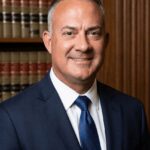 20+ years in high-stakes federal cases
- Represents corporate executives, public officials, and in-house counsel in fraud and financial crime matters
- Guides clients from quiet internal investigations through trial with focus and discretion
Wise D. Allen — Counsel Federal Criminal Defense Attorney
 Former Veteran Lieutenant Commander Judge Advocate, United States Military
- Former federal appellate attorney representing the United States
- Extensive experience in federal litigation, False Claims Act defense, and international contracting
These are not attorneys who transitioned from state practice. They built their careers in the federal system. When they tell you how DOJ prosecutors think and how OIG investigators build healthcare fraud cases — they are speaking from direct experience on that side of the table.
When we tell you that our team has been on the other side of these cases, we mean it precisely. They have stood in front of federal grand juries presenting evidence against healthcare providers. They have negotiated with DOJ Civil Fraud Section attorneys. They have prosecuted Anti-Kickback Statute violations. They know the playbook because they ran it.
📞 Call 1.866.601.5518 to speak with a member of this team today.
Healthcare Fraud Defense for CEOs | Avoid These Critical Mistakes!
What Makes Our Federal Healthcare Fraud Defense Different
Federal practice only. We don’t handle DUIs, divorces, or personal injury. Every procedural pattern we recognize and every prosecutorial tactic we know how to counter comes from exclusive federal practice — for us, a federal healthcare fraud case isn’t a departure from the norm. It’s the only kind of case we take.
Civil and criminal are managed as one case, not two. Federal healthcare fraud almost always runs on parallel tracks — a civil FCA investigation and a criminal healthcare fraud investigation — and decisions in one affect the other. We coordinate both from day one.
Custom team assembly. Every case has different statutes at issue, different agencies involved, and a different risk profile. We build the team around the facts rather than assigning whoever’s available.
Direct access to Theodore Watson. Not a first-year associate, not a paralegal. He knows your case, answers your questions, and gives you a straight assessment of your options.
What’s Actually at Stake
Providers who receive a federal investigation notice often underestimate what’s ahead. This is not a fine and a return to normal practice:
| Consequence | Reality |
|---|---|
| Federal prison | 10–20+ years per count; multiple counts are standard |
| Criminal fines | Hundreds of thousands to millions of dollars, plus restitution |
| OIG exclusion | Mandatory upon felony conviction — bars Medicare/Medicaid billing, often permanently |
| Asset seizure | The government can freeze accounts and property before conviction, sometimes before indictment |
| Civil FCA liability | Treble damages plus per-claim fines, running alongside criminal exposure |
| License loss | State licensing boards act independently — a physician can lose a license before trial |
| Corporate Integrity Agreement | Up to 5 years of federal compliance monitoring if the case resolves civilly |
We’re not listing these to alarm you into a decision. We’re listing them because the providers we’ve seen make the most costly mistakes are the ones who underestimated what a federal investigation becomes when it’s mishandled. The time to understand your exposure is now, not after an indictment.
Understand Your Options — Call 1.866.601.5518 Download the Free Defense Checklist
Nationwide Medical Defense Lawyers for Doctors, Hospitals & Healthcare Providers in All 50 States
 Former Federal Prosecutors Defending Doctors Against Criminal Charges & License Suspensions – federal jurisdictions, with offices in Colorado, Florida, Houston, Los Angeles, and Washington, D.C. The law firm protects healthcare clients nationwide.
Our 18 USC 1347 federal healthcare fraud attorneys are available 24/7 for healthcare providers in Alaska, Arizona, Arkansas, Alabama healthcare fraud law firm; California healthcare fraud attorneys Colorado, Connecticut, Delaware, Florida healthcare fraud defense lawyer, Georgia, Hawaii, Illinois, Indiana, Kansas, Louisiana, Maine criminal defense, Maryland healthcare fraud attorneys criminal defense lawyers, and federal medical fraud defense lawyers, Massachusetts, 18 USC 1347 Michigan federal health care fraud lawyers Minnesota healthcare fraud defense attorneys, Mississippi, Missouri, Montana, Nebraska, Nevada, New Hampshire healthcare fraud attorneys, New Mexico, New York, North Carolina, Ohio, Oklahoma, Pennsylvania, Rhode Island, South Carolina, Tennessee, Texas healthcare fraud defense lawyer, U.S. Virgin Islands, Utah healthcare fraud defense lawyer, Vermont, Virginia, Washington, Washington DC HealthCare fraud attorneys and False Claims Act defense lawyer, West Virginia, Wisconsin pharmaceutical fraud defense lawyer, and Wyoming healthcare fraud lawyer. Looking for federal healthcare fraud lawyer near me?
Our law firm Can represent clients and assist federal healthcare providers, manufacturers, hospitals, providers, and CEOs including Anchorage, AK; Atlanta, GA; Baltimore health care fraud attorney,, MD; Austin, TX; Chicago, IL; Colorado Springs healthcare fraud attorneys, CO; Dallas healthcare fraaudcriminal defense attorneys healthcare fraud, TX; Denver, Colorado; Indianapolis, IN; Las Vegas, NV; Los Angeles, CA; Miami, FL; Philadelphia, PA; Dallas healthcare fraud defense attorneys and Houston healthcare fraud defense attorney, San Antonio, TX; Fort Lauderdale health care fraud False Claims Act defense attorneys, FL; Sacramento 18 USC 1347 federal healthcare fraud attorneys, San Diego healthcare fraud defense lawyer, CA healthcare fraud criminal defense attorneys healthcare fraud; San Francisco federal medical fraud lawyers, CA; San Jose federal healthcare fraud attorneys, CA; Santa Clara, CA; and Tampa, FL.
Frequently Asked Healthcare Fraud Questions
What should I do the moment I receive a federal subpoena related to healthcare fraud? Don’t respond, produce documents, or speak with investigators without counsel. A federal subpoena signals an active grand jury or DOJ investigation. We determine your status — witness, subject, or target — analyze the scope of the subpoena, and respond in a way that satisfies your legal obligations while protecting your rights.
What’s the difference between a “target,” a “subject,” and a “witness”? A target is someone the government has substantial evidence against — the highest risk of indictment. A subject’s conduct falls within the investigation’s scope, but no charging decision has been made. A witness has relevant information without personal exposure — though that status can change. We determine your status at engagement and monitor it throughout.
Could someone have already filed a sealed qui tam lawsuit against me? Yes — a former employee, partner, or competitor may have already filed one under the False Claims Act. The government investigates under seal, typically for one to three years, before deciding whether to intervene. You’d have no notice until the case is unsealed. If you have any reason to believe your billing practices are under scrutiny, the time to assess exposure is before that happens.
Can I negotiate with the government before charges are filed? Often, yes — and pre-charge intervention is frequently the most valuable thing counsel can do. We analyze the government’s likely theory, build a factual and legal record challenging it, and in appropriate cases open direct dialogue with prosecutors about declination. That window closes once an indictment is returned.
What is OIG exclusion, and how does it relate to my criminal case? OIG exclusion bars individuals and entities from Medicare, Medicaid, and all federal healthcare programs. It’s mandatory upon any felony healthcare fraud conviction and can also be imposed on a permissive basis during an active investigation — cutting off federal program revenue before trial. We handle this as a parallel track alongside the criminal defense.
What happens to my professional license if I’m charged? A federal indictment typically triggers notification to your state licensing board, which can suspend a license before conviction — sometimes before a trial date is even set. We coordinate the licensing board proceeding alongside the federal criminal defense.
Do I need an attorney local to my federal district? You need an attorney who understands the federal system and the specific U.S. Attorney’s Office handling your matter — its enforcement priorities, charging philosophy, and bench. We practice in federal court nationwide across all 94 districts.
How long do these investigations typically run before charges are filed? Two to five years is common. The government builds methodically and prefers not to expose an investigation until the case is airtight. Most providers have no idea they’re under review for the majority of that time — which is why early counsel matters even when nothing has been formally served yet.
Talk to a Federal Healthcare Fraud Defense Attorney Today
Every decision from this point forward matters. If you’re ready to speak with our healthcare fraud attorneys, call 1.866.601.5518 to reach Theodore Watson directly, or contact us online to schedule a confidential consultation.
Call 1.866.601.5518 — Free, Confidential Consultation. Download the Free False Claims Act Defense Checklist
Prior results do not guarantee similar outcomes; this is attorney advertising. This information is provided for general purposes only and does not constitute legal advice. Reading this page does not create an attorney-client relationship. Watson & Associates, LLC is headquartered in Denver, Colorado, and maintains offices in Denver and Washington, D.C. Firm attorneys are licensed to practice state law only in the states identified in their individual biographies; with limited case-by-case exceptions, the firm’s practice is limited to matters of federal law and federal procedure. Full engagement and website disclaimers apply.