
Federal False Claims Act Lawyers & Qui Tam Defense Attorneys — Nationwide
 Something has already happened, or you wouldn’t be reading this: a target letter, a subpoena, a Civil Investigative Demand, or the discovery that a current or former employee has filed a qui tam complaint against your company. You don’t need a definition of the False Claims Act right now. You need to know what happens next, and federal False Claims Act lawyers who actually know how to fight it.
Watson & Associates, LLC defends companies and executives nationwide as false claims act defense attorneys, qui tam defense lawyers, and government contractor fraud attorneys.
We are a boutique-sized law firm that gives you direct access to attorneys who have prosecuted these cases for the DOJ and built federal contracts from inside the government, not a rotating team where FCA is one of a dozen things a large firm’s associates handle this month.
Call 1.866.601.5518 — our lines are open 24/7, and you can speak directly and confidentially with Theodore Watson.
What CEOs and Executives Actually Should Know
We just received a Civil Investigative Demand, subpoena, or target letter. What do we do in the next 24 hours? – Do not alter or delete anything, even routine records — this can turn a civil matter into an obstruction problem. – Issue a written litigation hold to every employee who might have relevant records. – Don’t let anyone respond to investigators, formally or informally, without counsel present. – Call counsel before deciding anything else, including whether to respond to the agency directly.
How do we find out if this is civil, criminal, or both? Often you can’t tell from the document alone. A civil investigative demand is a civil discovery tool, but the same underlying conduct can be investigated in parallel by DOJ’s Civil Division and a U.S. Attorney’s Office’s criminal division — sometimes without either side telling you the other is involved. Figuring out which offices are actually looking at your company, and whether a criminal referral already exists quietly alongside the civil one, is one of the first things that needs to happen.
A current or former employee filed a qui tam complaint against us. What does that actually mean right now? It means less than the phrase sounds like, procedurally, and more than it sounds like, strategically. Qui tam suits are filed under seal — confidential, with you not yet served — while DOJ investigates. The seal period is 60 days by statute but is routinely extended, sometimes for a year or more, so by the time you’re formally notified, the case may already be well developed. The practical question isn’t “how do we respond to the lawsuit” yet — it’s “what does our own record actually show,” answered before the government finishes building its case, not after.
Should we self-disclose before the government finds it? The FAR’s Mandatory Disclosure Rule requires disclosure of credible evidence of certain fraud, conflict of interest, or bribery violations, and a knowing failure to disclose is itself an independent basis for suspension or debarment, live for three years after final payment. But disclosing before you understand your own exposure — without privilege protections in place — can hand the government a roadmap it didn’t otherwise have. This is a decision for a privileged internal investigation first, not a reflexive call to the contracting officer or program office.
If DOJ declines to intervene in the qui tam suit, are we safe? No, but it’s a meaningful data point. In FY2025, private relators filed a record 1,297 qui tam suits, while DOJ itself opened only 401 investigations of its own — meaning declination is common, not rare. A declined case lets the relator’s own counsel proceed independently, and declined cases have produced real recoveries before. But DOJ’s own attorneys, after reviewing the file, chose not to commit government resources directly — worth factoring into settlement posture, not a reason to relax.
What does defending a case like this actually cost? It varies enormously by stage. Responding to a CID and conducting an internal investigation costs meaningfully less than litigating a case DOJ has already intervened in and taken to the edge of trial. Our False Claims Act lawyers give an honest range for your specific situation on the initial call — not a number designed to get you in the door.
Will our insurance cover this? Many standard commercial general liability and even D&O policies exclude or sharply limit coverage for False Claims Act matters specifically, sometimes with carve-outs for defense costs even where indemnity is excluded. Check policy language early, and involve coverage counsel if there’s any ambiguity — don’t assume you’re covered.
Do we need to fire the employee who we believe filed the complaint? Not automatically, and doing so reflexively creates its own exposure: retaliation claims under the FCA’s anti-retaliation provision (31 U.S.C. § 3730(h)) are a separate and serious risk on top of the underlying case, and terminating the wrong person at the wrong time can hand the relator’s counsel a second claim you didn’t need to create.
Can the losing defendant ever recover its own attorney’s fees in a qui tam case? Rarely, but it happens. Unlike a prevailing relator or the government, a prevailing defendant must show the relator’s claim was clearly frivolous, vexatious, or brought primarily to harass — a high bar. It has succeeded: in United States ex rel. Wall v. Circle C Construction, LLC, the Sixth Circuit upheld a fee award to the defendant under the Equal Access to Justice Act after the court found the government’s damages theory was, in its words, closer to “fairyland rather than actual.”
Unlike many traditional criminal or civil cases, Qui Tam defense actions can be premised on a variety of substantive government contracting regulations such as the Buy American Act, and violations of SBA small business regulations. (Including HUBZone and SBA 8(a), and SDVOSB laws.)
We help with allegations involving:
- Buy American Act
- Trade Agreements Act
- SBA small business programs (HUBZone, 8(a) and SDVOSB)
- Pass-through contracting
- Limitations on Subcontracting
- FAR compliance matters
As Federal Qui Tam Defense False Claims Lawyers, we also help contractors to conduct internal investigations, respond to federal government investigations, defend FCA lawsuits filed under the Federal False Claims Act, and defend against Qui Tam retaliation lawsuits.
The False Claims Act, Plainly: What You’re Actually Exposed To
 The Federal Civil and Criminal False Claims Act (31 U.S.C. §§ 3729–3733 and 18 U.S.C. § 287) is simultaneously a civil recovery statute and a criminal one — and most defense counsel who don’t handle government contracts regularly only think about one side of that at a time.
- Civil exposure: treble damages (three times the government’s loss) plus a per-claim penalty currently set at $14,308 to $28,619 per false claim (effective July 3, 2025, unchanged into 2026). With thousands of individual claims in a large contract or billing dispute, penalties alone — before damages — can run into the tens of millions.
- Criminal exposure: up to five years in federal prison per count under 18 U.S.C. § 287 for a knowing false claim, often charged alongside mail/wire fraud and conspiracy statutes when DOJ believes the conduct was intentional rather than merely negligent.
- Collateral exposure: suspension or debarment can follow either track, sometimes based on allegations alone, before any court has ruled on the merits.
The scale of enforcement, current as of this writing: – DOJ recovered more than $6.8 billion in FCA settlements and judgments in FY2025 — the highest total in the statute’s history. – Qui tam suits hit a record 1,297 filings in FY2025, versus DOJ opening only 401 investigations of its own. – DOJ’s 2024 Corporate Whistleblower Awards Pilot Program added a new financial incentive layer for reporting corporate misconduct, on top of the existing qui tam share — whistleblower activity is not slowing down. – A March 2026 Executive Order directed agencies to write DEI-compliance language into contracts as an explicit materiality trigger for FCA purposes — closing off one of the most common defenses (that a violated requirement wasn’t material to payment) for any contractor with that clause in a current or future contract. See information and tips about False Claims Act Whistleblower defenses for federal contractors.
Why the Government’s Case Is Rarely as Airtight as the Notice Letter Makes It Sound
This isn’t a promise that every case ends well. It’s how these cases actually get won, narrowed, or settled on favorable terms — grounded in the law, not in hope:
- Materiality has to be proven, not assumed. The Supreme Court’s unanimous decision in Universal Health Services v. Escobar (2016) set a “rigorous” and “demanding” materiality standard and held that if the government keeps paying a contractor’s claims in full after learning about the alleged noncompliance, that’s strong evidence the requirement wasn’t actually material to its decision to pay. This single fact pattern — continued payment despite known issues — recurs constantly and is often the strongest card a defendant holds.
- The record has to show what your people actually knew, and when. The FCA requires actual knowledge, deliberate ignorance, or reckless disregard — not simply a legal interpretation that turns out, in hindsight, to be wrong. The Supreme Court’s 2023 decision in S. ex rel. Schutte v. SuperValu confirmed this turns on subjective belief, meaning the case is fought and won in your emails, internal memos, and compliance notes — not the regulation’s text alone.
- Not every qui tam suit carries DOJ’s own endorsement, as the FY2025 numbers above show — a real, quantifiable signal about how seriously the government’s own attorneys took the file.
- Prior public disclosure can end a case before the facts are ever litigated, unless the relator qualifies as an original source — a jurisdictional argument that can dispose of a case regardless of whether the underlying conduct occurred.
Finding these openings takes reading the government’s file the way the government itself would read it. That’s the edge of a team that has prosecuted these cases from inside DOJ and built federal contracts from inside a procurement office — not only studied them from outside.
Who’s Actually Defending Your Case
-
Nationwide Government Contractor False Claims Act Lawyers – Practice Leads
Carolyn L. Oliver – Of Counsel (former DOJ attorney)
 Of Counsel to Watson & Associates, LLC: Carolyn L. Oliver brings over 40 years of distinguished legal experience to Watson & Associates’ Federal White Collar Defense and Investigations practice. As a former DOJ Assistant United States Attorney in the Major Frauds Section of the U.S. Attorney’s Office for the Southern District of California, Oliver provides clients with representation from a federal white collar crime lawyer who has prosecuted the very types of cases she now defends. Her extensive federal prosecution background, combined with her proven track record in complex criminal defense, positions her as a formidable advocate for corporations, CEOs, and individuals facing high-stakes federal investigations.
As Of Counsel to Watson & Associates’ Federal White Collar Defense and Investigations practice, Oliver focuses her practice on representing companies and individuals in federal criminal government contractor fraud and civil investigations and prosecutions by government enforcement agencies, as well as complex federal litigation. She also advises companies on high-profile, complex, and sensitive internal investigations. Read more…
Chris Mancini – Of Counsel (Former DOJ Prosecutor)
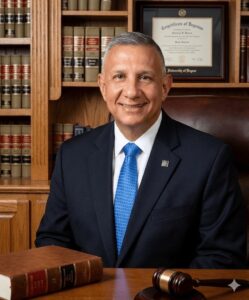 Chris Mancini, Counsel, brings 45 years of legal experience to Watson & Associates, to support the firm’s federal white collar defense attorney services, including eight years as an Assistant U.S. Attorney in the Southern District of Florida (DOJ), where he served as Deputy Chief of both the Criminal Division and Civil Division.
Chris Mancini specializes in navigating the complexities of the federal court system, providing legal advice, investigating cases, and building strong defense strategies to protect the firm’s clients’ rights and achieve the best possible outcome.
If you have been indicted for a federal white collar crime, you should hire experienced white collar crime lawyers to protect your rights and fight back.Read more.
Theodore P Watson – Former Federal Procurement Official
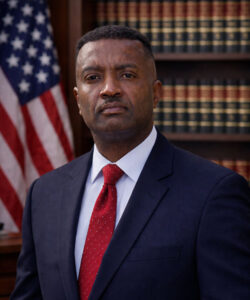
Speak to National Procurement Law Practice Leader, CEO – Air Force Retired Veteran, Theodore Watson (Over 23 Years of Federal Practice – Admitted to the Supreme Court of the United States.
Air Force veteran and former federal procurement executive, is admitted to practice before the Supreme Court of the United States, with over 23 years of federal procurement and litigation practice. He personally oversees the firm’s government contract fraud and qui tam defense matters nationwide.
 Robert “Bob” Ayers, Of Counsel. With over 20 years of experience, Robert “Bob” Ayers is a trusted advisor in high-stakes federal cases, representing corporate executives, public officials, and in‑house counsel in matters such as fraud, bribery, obstruction of justice, and other financial and regulatory offenses.
 Known for his clear, grounded, and personable approach, he guides clients through every stage—from quiet internal investigations to trial preparation—bringing discretion, focus, and a steady hand as federal white collar crime lawyer. His practice is further strengthened by strategic collaborations with former prosecutors, forensic experts, and regulatory specialists. Read more
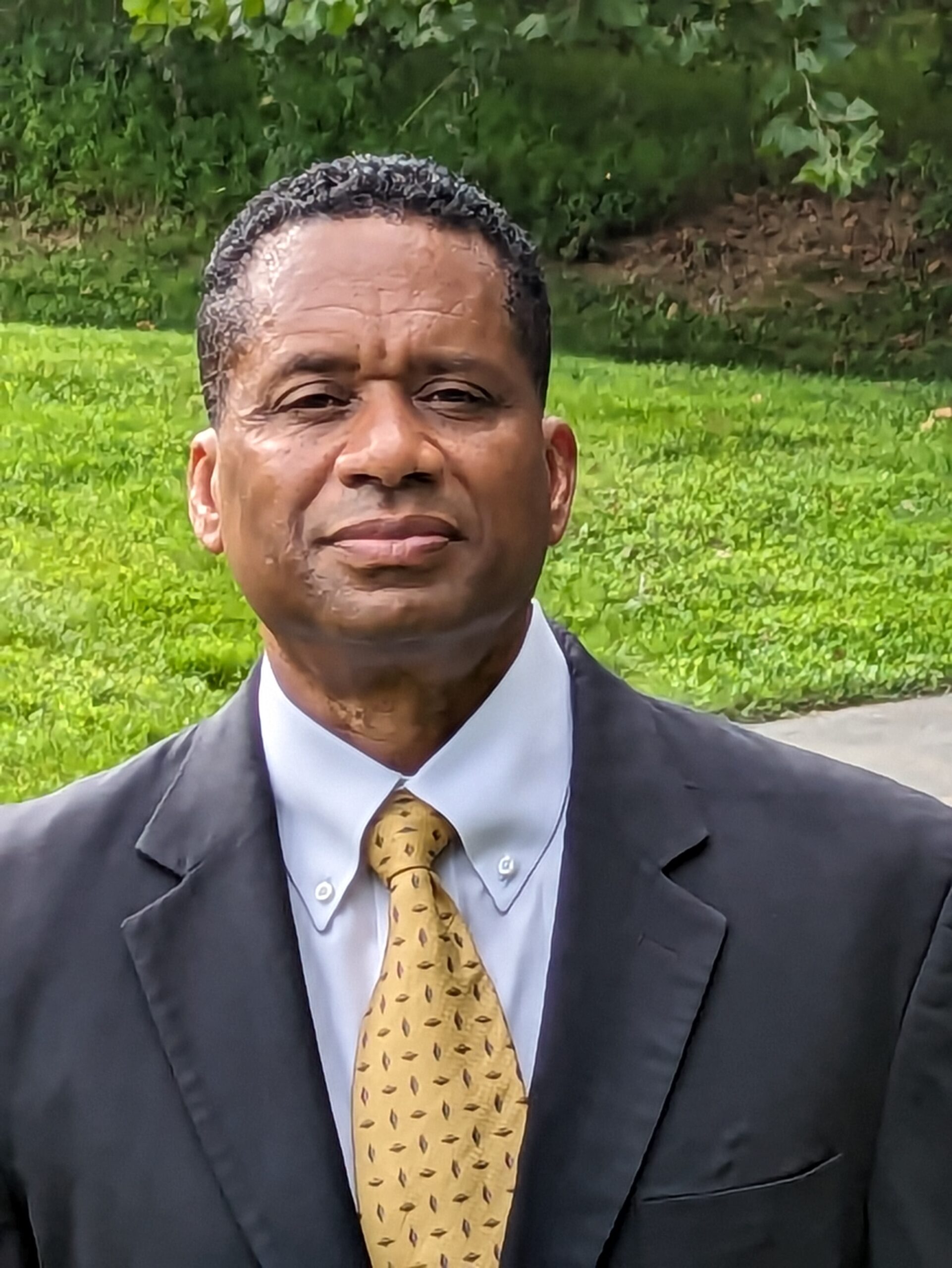
 Wise D. Allen, Esquire , Counsel, is a former Veteran Lieutenant Commander Judge Advocate for the United States Military. He also has extensive knowledge and experience in resolving corporate defense and litigation in vast international and national legal issues.
 He brings a wealth of successful experience to government contractors seeking defense counsel in the various areas of procurement fraud, international contracting, False Claims Act defense, and more.
Mr. Allen’s federal litigation experience as a former appellate attorney representing the United States and federal attorney for defendants in trials that led to his clients receiving overwhelmingly favorable outcomes in contested issues and obtaining non-contested resolutions. Read more..
For a FREE Initial Consultation , Call 1.866.601.5518 and Speak to Mr. Watson
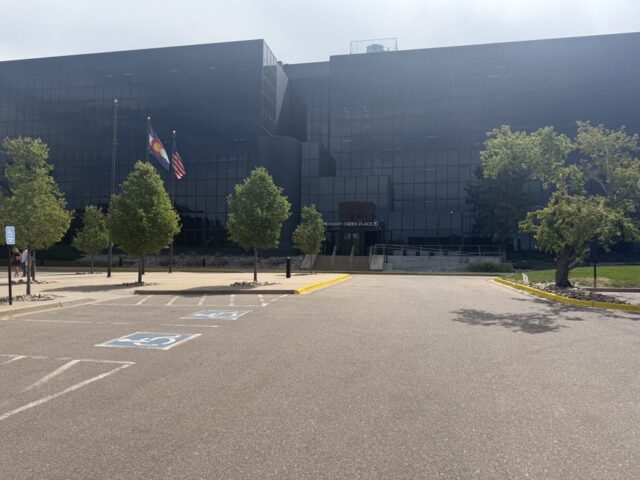
With law offices in Washington DC and in Denver, CO, our False Claims Act Qui Tam defense attorneys are geographically positioned to defend federal contractors throughout the United States and overseas.
What Happens Next
For civil matters, we work with your leadership and existing corporate counsel to build a defense early — before a position is locked in, and before privilege is waived by an offhand email. For matters with criminal exposure, we build a coordinated civil-and-criminal strategy from day one, rather than treating the two as separate problems handled by separate, uncoordinated counsel.
Call 1.866.601.5518 — open 24/7. Speak directly and confidentially with Theodore Watson.
(Free consultation. Download our False Claims Act Defense Checklist for an immediate first step if you’re not ready to call yet.)
Contact a Federal Qui Tam Defense Attorney & Federal False Claims Act Lawyers
For immediate help building a strong legal defense, contact Watson & Associates’ False Claims Act lawyers and Qui Tam defense attorneys today at 1.866.601.5518 for a free and confidential consultation.