California Government Contracts Attorneys & Government Contractor Fraud Lawyers
 Something already happened, or you wouldn’t be reading this: a bid you lost that didn’t add up, a contracting officer’s decision you need to appeal, an SBA small biusiness size protest against your small business, or — the call that changes everything — a subpoena, a Civil Investigative Demand, or a target letter from a U.S. Attorney’s Office in Los Angeles, San Diego, San Francisco, or Sacramento. Our government contracts attorneys and procurement fraud law office put CEO’s and companies on the right track. You need to know what happens next.
Watson & Associates, LLC represents California federal contractors and executives as government contracting attorneys, government contracts litigation lawyers, and government contractor fraud attorneys — across the full range of what “government contracts” actually means: bid protests, Contract Disputes Act claims, SBA small business matters, and, when a contract dispute turns into something more serious, False Claims Act defense and federal criminal fraud defense.
California is home to some of the country’s most significant federal contractors in defense, aerospace, technology, infrastructure, and healthcare — which also means it’s home to some of DOJ’s most active U.S. Attorney’s Offices for procurement fraud enforcement.
Call 1.866.601.5518 — our lines are open 24/7, and you can set a time to speak directly and confidentially with Theodore Watson.
What California Contractors and CEOs Ask First
We just received a Civil Investigative Demand, subpoena, or target letter from a California U.S. Attorney’s Office. What do we do in the next 24 hours? – Do not alter or delete anything, even routine records — this can turn a civil matter into an obstruction problem. – Issue a written litigation hold to every employee who might have relevant records. – Don’t let anyone respond to investigators, formally or informally, without counsel present. – Call counsel before deciding anything else, including whether to respond to the agency directly.
Is this a civil case or a criminal case, and how do we tell? Often you can’t tell from the document alone. California’s federal districts run some of the country’s most active procurement fraud dockets, and the same conduct can be investigated in parallel by DOJ’s Civil Division and a U.S. Attorney’s criminal division — sometimes without either side telling you the other is involved.
Can our internal emails and draft documents really matter in a False Claims Act case? Yes. In both federal and California False Claims Act matters, internal records are routinely used to argue “knowledge” or “reckless disregard.” Before you produce anything, you should understand what your own files actually show — not find out at the same time the government does.
How does the California False Claims Act interact with the federal one? Federal contracts expose you to the federal False Claims Act; state and local work in California can also trigger the California False Claims Act, and for contractors who do both federal and state-funded work, both statutes can be in play on overlapping facts. The analysis has to account for both regimes at once.
Should we self-disclose before the government finds it? The FAR’s Mandatory Disclosure Rule requires disclosure of credible evidence of certain fraud, conflict of interest, or bribery violations, and a knowing failure to disclose is itself a separate basis for suspension or debarment that stays live for three years after final payment. But disclosing before you understand your own exposure can hand the government a roadmap it didn’t otherwise have — this needs a privileged internal investigation first.
What if our issue started as a contract dispute, cure notice, or audit finding, not a fraud allegation? Disputes over performance, changes, or DCAA audit findings can escalate into fraud theories if the government believes communications suggest it was misled. Handling the underlying contract dispute correctly from day one — with counsel who thinks about both the contract issue and how it could be read later — is often what keeps a performance dispute from becoming a fraud referral.
We lost a bid we believe was wrongly decided. What are our options? That depends on what went wrong and how fast you act. We handle protests before the U.S. Court of Federal Claims and, on appeal, the U.S. Court of Appeals for the Federal Circuit. If the issue is with a competitor’s small business size, that’s a separate track entirely — see below.
A competitor is challenging our small business size status. How fast do we need to move? Extremely fast. A size protest must reach the contracting officer within five business days of notification of the apparent successful offeror. If you’re appealing an adverse size determination to the SBA’s Office of Hearings and Appeals, that deadline is 15 calendar days from receipt — a completely different clock that is constantly confused with the protest deadline.
Do you represent California contractors in matters outside California? Yes. Many California contractors are investigated by Main Justice in Washington or by U.S. Attorney’s Offices in other districts entirely. Our practice is national in scope — California is a central focus, not an isolated market.
Government Contracts Services for California Contractors: Bid Protests, Claims, and Small Business Matters
 Not every California government contracts matter is a fraud case — most aren’t. Here’s what a California government contract lawyer handles day to day, well before anything becomes an enforcement matter:
Federal bid protests. We litigate protests before the U.S. Court of Federal Claims and, on appeal, the Court of Appeals for the Federal Circuit. One detail that trips up contractors constantly: under Blue & Gold Fleet, L.P. v. United States, 492 F.3d 1308 (Fed. Cir. 2007), a patent defect in a solicitation — an error a reasonable offeror should have caught — generally has to be challenged before the close of bidding, or the right to raise it later is waived, regardless of the Tucker Act’s separate six-year statute of limitations.
Contract Disputes Act claims and REAs. If California-based performance was affected by a government-caused delay, a change in requirements, or defective specifications, recovering those costs requires a properly certified CDA claim with a sum certain — not just an invoice. Once the contracting officer issues a final decision, the appeal clock is unforgiving: 90 days to the relevant Board of Contract Appeals, or 12 months to the Court of Federal Claims, whichever you choose first is binding.
SBA size protests and appeals to OHA. These are two different proceedings on two different clocks. A SBA size protest must reach the contracting officer within five business days of notification of the apparent successful offeror. A size appeal to the SBA’s Office of Hearings and Appeals — a separate, later step, taken after an adverse Area Office determination — must be filed within 15 calendar days, and requires showing a clear error of fact or law, not simply a different possible conclusion.
Joint ventures, teaming agreements, and the Mentor-Protégé Program. SBA’s rules here changed substantially in 2023–2025: populated joint ventures are now largely prohibited, the protégé workshare requirement is a hard 40% (not the old, litigated “significant portion” standard), and a 2025 rule now limits a mentor to one joint venture position per multiple-award contract at a time. A joint venture that was compliant at award can fall out of compliance mid-performance if recertification triggers — mergers, acquisitions, five-year contract anniversaries — aren’t tracked.
Suspension and debarment defense. Even without a finding of fraud, a credible allegation can trigger a suspension based on allegations alone. Debarment requires formal notice and a “present responsibility” finding — a standard that allows resolution through corrective action and a negotiated administrative agreement rather than full litigation.
Nationwide Government Contractor Fraud Defense Practice Leads
Carolyn L. Oliver – Of Counsel (former DOJ attorney – California Lead)
 Of Counsel to Watson & Associates, LLC: Carolyn L. Oliver brings over 40 years of distinguished legal experience to Watson & Associates’ Federal White Collar Defense and Investigations practice. As a former DOJ Assistant United States Attorney in the Major Frauds Section of the U.S. Attorney’s Office for the Southern District of California, Oliver provides clients with representation from a federal white collar crime lawyer who has prosecuted the very types of cases she now defends. Her extensive federal prosecution background, combined with her proven track record in complex criminal defense, positions her as a formidable advocate for corporations, CEOs, and individuals facing high-stakes federal investigations.
As Of Counsel to Watson & Associates’ Federal White Collar Defense and Investigations practice, Oliver focuses her practice on representing companies and individuals in federal criminal government contractor fraud and civil investigations and prosecutions by government enforcement agencies, as well as complex federal litigation. She also advises companies on high-profile, complex, and sensitive internal investigations. Read more…
Chris Mancini – Of Counsel (Former DOJ Prosecutor)
Chris Mancini, Counsel, brings 45 years of legal experience to Watson & Associates, to support the firm’s federal white collar defense attorney services, including eight years as an Assistant U.S. Attorney in the Southern District of Florida (DOJ), where he served as Deputy Chief of both the Criminal Division and Civil Division.
Chris Mancini specializes in navigating the complexities of the federal court system, providing legal advice, investigating cases, and building strong defense strategies to protect the firm’s clients’ rights and achieve the best possible outcome.
If you have been indicted for a federal white collar crime, you should hire experienced white collar crime lawyers to protect your rights and fight back.Read more.
Theodore P Watson – Former Federal Procurement Official
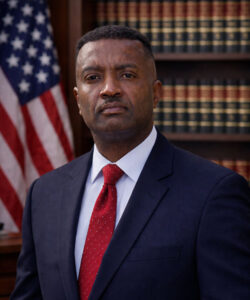
Speak to National Procurement Law Practice Leader, CEO – Air Force Retired Veteran, Theodore Watson (Over 23 Years of Federal Practice – Admitted to the Supreme Court of the United States.
Air Force veteran and former federal procurement executive, is admitted to practice before the Supreme Court of the United States, with over 23 years of federal procurement and litigation practice. He personally oversees the firm’s government contract fraud and qui tam defense matters nationwide.
- Cheryl Adams is a former federal Contracting Officer who has personally conducted government property audits — the “normal” government contracts side of this team, not just the fraud defense side.
Meet the rest of our team leads here.
Government Contractor Fraud and False Claims Act Defense in California
California is home to some of the country’s most significant federal contractors in defense, aerospace, technology, infrastructure, and healthcare. When those contracts become the focus of a fraud or False Claims Act investigation, the stakes include treble damages, debarment, and federal criminal charges — not just a contract dispute.
 The Federal Civil and Criminal False Claims Act (31 U.S.C. §§ 3729–3733 and 18 U.S.C. § 287) is almost always the statute lurking behind these cases. It’s simultaneously a civil recovery tool (treble damages plus a per-claim penalty, currently in the $13,500–$28,000 range) and a criminal statute (up to five years per count for a knowing false claim). DOJ recovered more than $6.8 billion in FCA settlements and judgments in FY2025 — the highest total in the statute’s history — while defense and procurement-related recoveries alone rose from roughly $98 million in FY2024 to nearly $634 million in FY2025.
Government contract fraud theories we regularly see in California: – Eligibility and certification misstatements — alleged misrepresentation of small business status, ownership and control, SDVOSB status, or other set-aside eligibility criteria. –
Pricing and cost issues — incomplete or inaccurate cost/pricing data, unallowable costs, or undisclosed commercial pricing and discounts.
–Performance and quality issues framed as fraud — allegations that defects, substitutions, or quality-control failures were concealed to obtain payment. –
Buy American Act / Trade Agreements Act and supply-chain issues — misrepresented country of origin or failure to meet domestic content thresholds (currently 65%, rising to 75% in 2029 under the Build America, Buy America framework). A March 2026 Executive Order directed agencies to audit “Made in America” claims on Multiple Award Schedule and IDIQ vehicles specifically, and DOJ has already brought criminal charges elsewhere in the country over false country-of-origin certifications — this is an active enforcement priority, not a theoretical risk.
– Pass-through and “rent-a-cert” arrangements — allegations that a nominal small or disadvantaged business didn’t actually perform the required portion of the work.
Why the government’s case is rarely as airtight as the notice letter makes it sound
This isn’t a promise that every investigation ends well. It’s a statement of how these cases actually get won or narrowed, grounded in the law, not in hope:
- Materiality has to be proven, not assumed. The Supreme Court’s unanimous decision in Universal Health Services v. Escobar (2016) set a “rigorous” and “demanding” materiality standard, and specifically held that if the government keeps paying a contractor’s claims in full after learning about the alleged noncompliance, that’s strong evidence the requirement wasn’t actually material to its decision to pay.
- Government awareness matters. What contracting officers, program officials, and DCAA auditors knew, tolerated, or directed over the life of a contract bears directly on both materiality and knowledge — and it’s often not in the government’s initial letter.
- Not every whistleblower suit carries DOJ’s own endorsement. In FY2025, private relators filed a record 1,297 qui tam suits nationally, while DOJ itself opened only 401 investigations of its own — meaning whether DOJ intervenes in a given case is a real signal about how the government’s own attorneys assessed the file.
- The record has to show what your people actually knew, and when — not what a regulation says in hindsight. The Supreme Court’s 2023 decision in S. ex rel. Schutte v. SuperValu confirmed this turns on subjective belief, which means these cases are won or lost in your emails, memos, and compliance notes, not the regulation’s text alone.
Finding these openings takes reading the government’s file the way the government itself would read it. That’s the advantage of a team that has built these cases from inside DOJ and inside a federal procurement office, not only studied them from outside.
How Federal Government Contract Fraud Investigations Actually Start in California
The first sign of trouble is rarely a complaint in court — it’s an investigative step many contractors underestimate at the time:
- Qui tam complaints, filed under seal by current or former employees, subcontractors, or competitors, often in one of California’s federal districts. You may not know one exists for months, since the initial seal period is 60 days by statute but is routinely extended, sometimes for a year or more.
- Civil investigative demands and subpoenas, issued by DOJ or agency counsel before any case is filed.
- DCAA and OIG audits that flag billing, pricing, or performance issues in the course of routine or targeted review.
- Agency disputes and protests — bid protests, cure notices, terminations, or small business challenges — that get referred beyond contracting staff once someone suspects the underlying conduct wasn’t just a mistake.
At that point, the job is to clarify quickly whether the matter is civil, criminal, or both in parallel; identify which offices and decision-makers are actually involved; and help leadership understand, without spin, how serious the exposure really is.
Results you can verify, not just claims: – Size Appeal of Mechanix Wear LLC, SBA No. SIZ-6098 (2021) — served as intervenor’s counsel; OHA affirmed the small business determination against the challenger’s appeal. – Size Appeal of Contego Environmental, LLC, SBA No. SIZ-6073 (2020) — reversed the Area Office’s finding on the ostensible subcontractor rule. – Suspension and debarment matter (2019) — persuaded a Suspension and Debarment Official to terminate a proposed three-year debarment stemming from a $450,000 mischarging allegation. – Agency-level bid protest (2011) — sustained after showing the awardee failed to meet Buy American Act domestic manufacturing requirements.
Speak Confidentially with Top California Government Contracts Attorneys
If you are a federal contractor or executive in California and have received a subpoena, CID, target letter, cure notice, or size protest, the clock is already running — whether that’s a 5-day, 15-day, or 90-day clock depends entirely on which matter you’re in, and getting that wrong is its own way to lose.
Call 1.866.601.5518 — our lines are open 24 hours a day, seven days a week, and you can speak directly and confidentially with Theodore Watson.
(Representation available to California contractors statewide, coordinated with our Washington, DC and Denver offices; see Contact Us for full details. With few case-by-case exceptions, our practice is limited to matters of federal law and federal procedure.)
Los Angeles, California
1800 Vine St
Los Angeles, CA 90028
San Diego, California
1 (866) 601.5518. (Toll-Free)
For a FREE Initial Consultation, Call Watson’s defense contractor fraud lawyers and government contracts attorneys at 1.866.601.6618 and speak to Mr. Watson .